
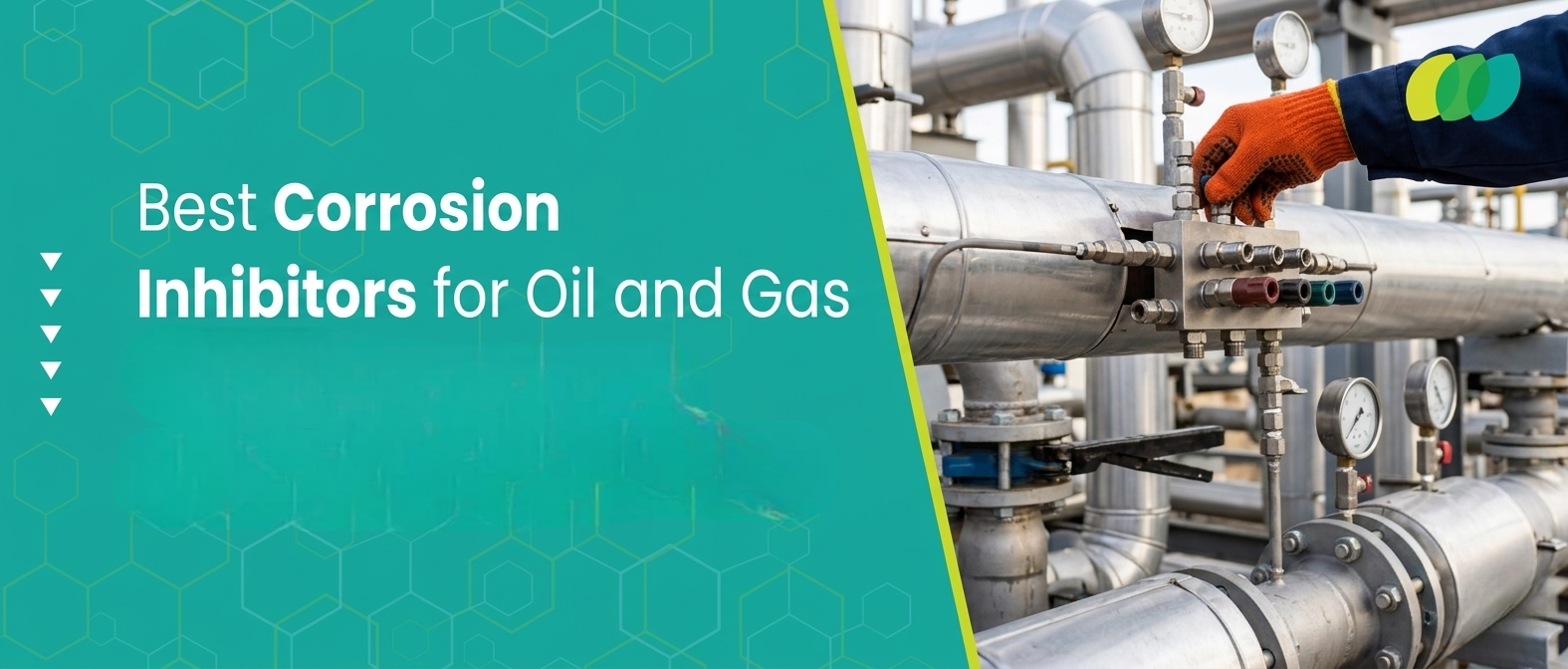
Corrosion destroys metal assets silently and relentlessly. Across oil, gas, and industrial sectors, it triggers pipeline failures, unplanned shutdowns, and catastrophic safety incidents — all at enormous financial cost. Metal operators face urgent, compounding pressure to act before damage becomes irreversible.
Delayed action makes everything worse. Selecting the right corrosion inhibitor chemicals determines whether assets last decades or fail ahead of schedule, triggering costly emergency repairs and unplanned operational shutdowns.
This guide covers the best corrosion inhibitors, how they work, which types suit which environments, and what drives smarter selection decisions across industries.
What Is a Corrosion Inhibitor?
A corrosion inhibitor is a chemical compound that reduces the corrosion rate of metal surfaces. These substances form a protective mechanism at the metal-fluid interface. They interrupt the electrochemical reactions responsible for rust, pitting, and material loss.
Corrosion inhibitors come in liquid, solid, and gaseous forms. Operators introduce them into process fluids, circulation systems, and protective coatings. Even trace concentrations — sometimes parts per million — deliver measurable protection results. This efficiency makes corrosion inhibitor chemicals among the most cost-effective tools for industrial metal preservation.
Understanding what a corrosion inhibitor does means understanding the cost of not using one. Unchecked corrosion causes pipeline failures, unplanned shutdowns, and serious safety incidents. In oil and gas alone, corrosion incidents cost billions annually. The right product prevents all of this.
Corrosion inhibitor chemicals serve industries ranging from oil and gas and water treatment to manufacturing, marine, and power generation. Matching the right chemistry to the right environment drives true protection performance.
How Do Corrosion Inhibitors Work?
Understanding the mechanism behind corrosion inhibition is essential for accurate product selection. Technical evaluation by experienced corrosion inhibitor formulators at the design stage ensures the selected chemistry matches the specific corrosive environment — preventing costly mismatches in the field.
Most corrosion inhibitors adsorb onto the metal surface. They form a thin, stable film that physically separates metal from corrosive agents. Water, oxygen, CO₂, H₂S, and chloride ions cannot attack the metal surface directly through this protective barrier.
Three primary inhibition mechanisms define how corrosion inhibitors work:
1. Anodic inhibition — reduces metal oxidation at anodic surface sites
2. Cathodic inhibition — slows reduction reactions at cathodic surface sites
3. Mixed inhibition — acts simultaneously on both anodic and cathodic reactions
Film-forming inhibitors, common in drilling chemicals and pipeline systems, create a hydrophobic barrier on metal surfaces. Adsorption inhibitors bond at the molecular level, delivering deep chemical resistance. Both mechanisms reduce electrochemical activity substantially and extend metal asset service life.
Types of Corrosion Inhibitors — A Complete Overview
Different environments demand different inhibitor chemistries. Selecting the wrong type wastes resources and leaves metal assets under-protected. Understanding each inhibitor category enables accurate and effective selection.
1. Anodic Inhibitors
Anodic inhibitors passivate the metal surface. They reduce the anodic dissolution rate by promoting stable oxide layer formation. Chromates, nitrites, and molybdates represent common anodic inhibitors. These products perform best in neutral to alkaline, oxygen-present environments.
2. Cathodic Inhibitors
Cathodic inhibitors slow reduction reactions at cathodic metal sites. They form insoluble precipitates on those areas, limiting electron transfer. Zinc salts and polyphosphates are common representatives. Cooling tower and boiler water protection programs rely on them extensively.
3. Mixed Inhibitors (Organic)
Mixed inhibitors address both anodic and cathodic reactions simultaneously. Organic compounds — amines, imidazolines, and phosphonates — dominate this category. These products offer broad-spectrum protection across a wide pH range. Oil and gas pipeline and downhole applications rely heavily on mixed inhibitors.
4. Film-Forming Inhibitors
Film-forming inhibitors deposit a hydrophobic layer on metal surfaces. This layer physically blocks corrosive media from making metal contact. These inhibitors feature prominently in drilling chemicals packages and pipeline protection programs. Fatty amines and imidazolines lead the film-forming inhibitor category globally.
5. Adsorption Inhibitors
Adsorption inhibitors bond directly to metal surfaces through chemical or physical forces. They prevent direct metal-to-corrosive-agent contact at the molecular scale. Highly acidic environments demand adsorption-type products. Acid pickling, well stimulation, and oilfield acidizing operations deploy them extensively.
6. Volatile Corrosion Inhibitors (VCI)
VCI inhibitors release protective vapor within enclosed spaces. This vapor condenses on metal surfaces and forms a continuous protective film. Storage tanks, packaged equipment, and idle pipelines benefit from VCI protection. No direct application to the metal surface is necessary.
Corrosion Inhibitor Comparison Table
| Inhibitor Type | Mechanism | Best Environment | Key Applications |
| Anodic | Surface passivation | Neutral to alkaline | Water treatment, cooling |
| Cathodic | Cathodic precipitation | Neutral to slightly acidic | Cooling towers, boilers |
| Mixed / Organic | Dual anodic + cathodic | Acidic to neutral | Oil & gas, downhole systems |
| Film-Forming | Hydrophobic barrier | Multiphase, high-flow | Drilling chemicals, pipelines |
| Adsorption | Molecular bonding | Highly acidic | Well acidizing, pickling |
| Volatile (VCI) | Well acidizing, pickling | Enclosed spaces | Storage tanks, idle equipment |
Core Corrosion Inhibitor Chemistries That Power Real-World Protection
Behind every high-performing corrosion inhibitor product lies a specific chemical family. These active chemistries determine how an inhibitor performs across temperature extremes, fluid compositions, and metal types. Understanding them guides more precise product selection for critical assets.
Imidazoline Based Corrosion Inhibitors
Imidazoline based corrosion inhibitors remain the industry benchmark for pipeline and downhole protection. Their nitrogen-rich ring structure adsorbs strongly onto steel surfaces. They perform reliably across wide temperature and pH ranges. CO₂ and H₂S environments — the most common oilfield corrosion drivers — respond well to imidazoline chemistry.
Fatty Alkyl Amine Corrosion Inhibitors
Fatty alkyl amine inhibitors form robust hydrophobic films on metal surfaces. The long alkyl chain structure creates stable barriers against aqueous corrosive media. These inhibitors work particularly well in multiphase flow systems and produced water environments. Their film persistence under turbulent flow conditions makes them valuable in active pipeline operations.
Ethoxylated Amine Corrosion Inhibitors
Ethoxylated amine inhibitors combine corrosion protection with excellent water dispersibility. The ethoxylation process makes these amines soluble in aqueous systems without sacrificing film-forming capability. Water injection systems, produced water handling lines, and water-based drilling chemicals formulations benefit greatly from ethoxylated amine chemistries.
Phosphate Ester-Based Corrosion Inhibitors
Phosphate ester-based corrosion inhibitors deliver dual functionality — simultaneous corrosion and scale control. The phosphate group bonds strongly to metal oxide surfaces. These inhibitors perform reliably in high-temperature, high-pressure environments. Refineries, process pipelines, and heat exchanger systems rely on phosphate ester chemistries for long-term asset protection.
Best Corrosion Inhibitors for Oil and Gas: The Complete Answer
Oil and gas environments combine the most aggressive corrosion drivers. High temperatures, pressures, formation brine, CO₂, and H₂S attack metal simultaneously. Standard industrial inhibitors do not withstand these combined conditions. The best corrosion inhibitors for oil and gas demand purpose-built chemical formulations.
Top-performing corrosion inhibitor chemicals for oil and gas include:
1. Imidazoline based inhibitors — the industry standard for pipeline and downhole protection
2. Quaternary ammonium compounds — effective in high-salinity and low-pH environments
3. Phosphate ester inhibitors — dual-action scale and corrosion control in water injection systems
4. Fatty alkyl amine inhibitors — protect internal pipeline surfaces under multiphase flow
5. Ethoxylated amine inhibitors — proven performers in water-based and injection system programs
For a detailed breakdown of inhibitor types specific to upstream operations, read Types of Corrosion Inhibitors for Oil and Gas — A Complete Guide.
Matching chemistry to each specific threat — CO₂ corrosion, H₂S attack, or chloride-induced stress — requires deep formulation expertise. Corrosion inhibitor manufacturers with oil and gas field experience provide performance data from comparable well conditions. That field evidence forms the most reliable basis for product selection.
Corrosion Inhibitors for Drilling Systems — Where Drilling Chemicals Make the Difference
Drilling operations introduce severe and simultaneous corrosion threats. Drill strings, casings, and downhole tools face attack from formation brine, dissolved CO₂, H₂S, and drilling fluid chemistry. Corrosion failures during drilling cause mechanical breakdown, non-productive time (NPT), and significant cost overruns.
Drilling chemicals serve a decisive protective role in managing this risk. Corrosion inhibitors for drilling systems must withstand extreme downhole temperatures and pressures. They must also maintain full compatibility with the complete drilling chemicals package — including fluid loss agents, lubricants, and mud additives.
Key corrosion inhibitors in drilling applications include:
1. H₂S Scavengers — neutralize hydrogen sulfide in sour well environments before it contacts metal surfaces
2. Oxygen Scavengers — eliminate dissolved oxygen before pitting corrosion initiates in drill fluids
3. Imidazoline based inhibitors — protect internal drill string surfaces in continuous fluid contact
4. Ethoxylated amine inhibitors — effective and dispersible in water-based mud systems
5. pH control agents — maintain alkaline conditions that resist acid-driven corrosion
Drilling chemicals manufacturers with specialized drilling programs develop customized inhibitor packages tailored to each well’s specific corrosion profile. Engaging experienced drilling chemicals manufacturers at the well planning stage ensures corrosion protection integrates seamlessly into the fluid system design from the start.
H₂S and Oxygen: The Two Silent Killers in Oilfield Corrosion
Among all corrosive agents in oil and gas operations, dissolved hydrogen sulfide and oxygen cause disproportionate damage. Both act fast, penetrate deep, and compromise structural integrity before visible signs appear on the metal surface.
H₂S Scavengers — Stopping Sour Corrosion at the Source
Hydrogen sulfide triggers sulfide stress cracking, hydrogen-induced cracking, and severe pitting in steel. These failure modes can compromise pipelines and wellbore casing at dangerous speeds. H₂S scavengers chemically react with dissolved H₂S and neutralize it before it contacts metal surfaces. In sour gas and sour crude operations, H₂S scavengers form a non-negotiable component of any robust corrosion management program.
Oxygen Scavengers — Preventing Pitting Before It Starts
Even trace dissolved oxygen concentrations — as low as 10 parts per billion — initiate aggressive pitting corrosion in carbon steel. Water injection systems and produced water handling lines face constant oxygen ingress risk. Oxygen scavengers eliminate dissolved oxygen through a rapid, targeted chemical reaction. Deploying oxygen scavengers at the earliest point of oxygen entry provides maximum asset protection across the entire downstream system.
How Corrosion Inhibitors Reduce Long-Term Maintenance Costs
Corrosion-related maintenance represents a major operational expense across all industrial sectors. Emergency pipeline repairs, unplanned shutdowns, and premature equipment replacement cost far more than prevention programs. Proactive use of corrosion inhibitor chemicals changes this equation fundamentally.
Structured corrosion management programs consistently reduce maintenance expenditure over time. Asset life extension alone justifies the investment. Fewer failures translate directly to fewer shutdowns, lower repair costs, and longer service intervals across the entire asset portfolio.
For a detailed financial analysis of protection economics, read How Corrosion Inhibitors Save Maintenance Costs — a data-backed breakdown of cost impact across industrial operations.
Prevention remains, by a significant margin, cheaper than remediation. The best corrosion inhibitors deliver a return that compounds across the full asset lifecycle.
List of Corrosion Inhibitors by Application
Different industries rely on different corrosion inhibitor chemicals. The following list of corrosion inhibitors organizes the most widely used products by application area:
Oil and Gas — Upstream Pipelines
- Imidazoline based inhibitors — internal pipeline corrosion control
- Fatty alkyl amine inhibitors — multiphase flow protection
- Phosphate ester inhibitors — injection and process water systems
Oil and Gas — Drilling
- H₂S scavengers — drilling chemicals for sour well environments
- Oxygen scavengers — dissolved oxygen removal from drill fluids
- Ethoxylated amine inhibitors — water-based mud system protection
Water Treatment
- Polyphosphates — cooling tower scale and corrosion control
- Zinc salts — boiler system protection
- Molybdates — closed-loop cooling circuit treatment
Manufacturing and Infrastructure
- VCI inhibitors — metal storage and transit protection
- Phosphonates — industrial water circuit treatment
- Organic inhibitor blends — structural steel and fabrication protection
No single corrosion inhibitor suits every application. Effective protection requires the right chemistry for the specific metal, environment, and operating conditions.
How to Choose the Right Corrosion Inhibitor for Metal Protection
Selecting the best corrosion inhibitor requires evaluating multiple interdependent factors. No single inhibitor protects all metals in all conditions. A structured evaluation process prevents costly mistakes and field underperformance.
Key selection criteria include:
1. Metal substrates — carbon steel, stainless steel, aluminum, and alloys respond differently to inhibitor chemistry
2. Corrosive medium — CO₂, H₂S, oxygen, mineral acids, and chlorides each require distinct inhibitor types
3. Temperature and pressure — extreme conditions degrade some inhibitor formulations rapidly
4. Flow regime — turbulent flow strips inhibitor films more aggressively than laminar flow
5. Regulatory environment — offshore and environmental regulations restrict certain chemistries
6. Chemical compatibility — inhibitors must not react adversely with co-injected chemicals in the system
7. Dosage efficiency — optimal protection at the lowest practical inhibitor concentration
Corrosion inhibitor manufacturers and suppliers with proven technical expertise guide operators through this evaluation. They deliver compatibility testing, dosage optimization data, and field performance benchmarks.
The American Chemical Society recognizes corrosion inhibition as a continuously advancing field, with new formulations expanding performance in extreme industrial conditions every year.
What Separates High-Quality Corrosion Inhibitor Chemicals from the Rest
Not all corrosion inhibitor chemicals deliver equal performance in the field. High-quality products share measurable characteristics that separate them from commodity alternatives:
1. High active content — more inhibitor substance per volume means more effective protection per dose
2. Thermal stability — consistent performance at elevated operating temperatures
3. Broad-spectrum action — effective against multiple simultaneous corrosion mechanisms
4. Low environmental impact — biodegradable, low-toxicity formulations increasingly required for compliance
5. System compatibility — no adverse reactions with other chemicals present in the operational system
6. Batch consistency — uniform quality across every production lot, every time
Corrosion inhibitor manufacturers that invest in in-house R&D, rigorous quality control, and field testing consistently produce superior products. Verified field performance history — not just laboratory data — provides the most reliable quality signal when selecting a product.
Conclusion
Corrosion threatens every metal asset across industrial, oil, and gas sectors. The best corrosion inhibitors — selected for the right environment, metal type, and application — deliver lasting protection and significant cost savings. Working with proven corrosion inhibitor manufacturers and suppliers ensures the right chemical solution reaches every critical system on time.
Frequently Asked Questions
- What is the best corrosion inhibitor for oil and gas pipelines?
Imidazoline based and fatty alkyl amine inhibitors rank among the best. Selection depends on temperature, pressure, fluid composition, and CO₂/H₂S concentrations in the specific operating system. - What is a corrosion inhibitor, and how does it work?
A corrosion inhibitor is a chemical that reduces the metal degradation rate. It adsorbs onto metal surfaces and forms a protective film, blocking corrosive agents — acids, water, and gases — from reaching the metal directly. - Are corrosion inhibitors part of drilling chemical packages?
Yes. H₂S scavengers, oxygen scavengers, and imidazoline-based inhibitors form standard components of drilling chemical formulations. They protect drill strings, casings, and downhole tools from aggressive corrosive attack. - What is the difference between H₂S scavengers and oxygen scavengers?
H₂S scavengers neutralize dissolved hydrogen sulfide to prevent sulfide stress cracking. Oxygen scavengers eliminate dissolved oxygen to stop pitting corrosion. Both target specific dissolved gases before they reach and damage metal surfaces. - How do corrosion inhibitor manufacturers verify product quality?
Reputable corrosion inhibitor manufacturers conduct laboratory testing, field trials, and batch analysis. They verify active ingredient concentration, thermal stability, and chemical compatibility before releasing any product for field deployment.