
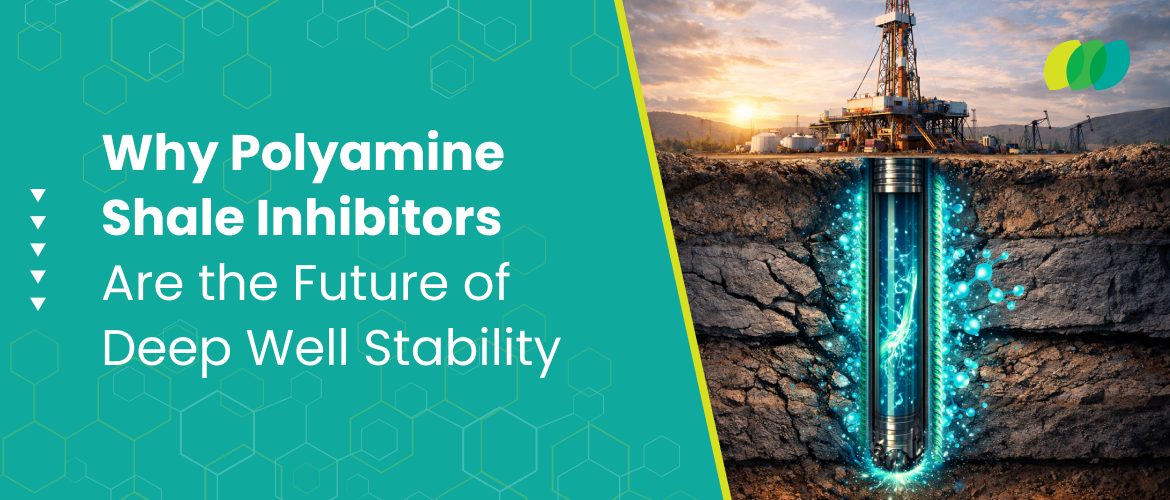
Shale instability drains billions from drilling budgets every year. Wellbore collapse happens. Pipes get stuck. Operations stop without warning. Most problems start the same way: reactive clay formations absorb water, swell up, and fall apart under pressure. Polyamine shale inhibitors stop this process.
Polyamine shale inhibitors attach to clay surfaces and block water from getting in. Fewer complications follow. Non-productive time drops. Well costs come down. If you are looking at drilling fluid programs, the money part is obvious. Better inhibition means you drill faster and fix less.
The High Cost of Shale Instability in Deep Wells
Deep wells deal with brutal conditions. Pressure climbs. Temperature rises. Shale formations become more reactive when both happen together. Clays take in water and expand. The wellbore gets weaker. Several things go wrong from there. The hole tightens up. Drilling slows down. Cleaning out cuttings becomes harder. Sometimes the pipe gets completely stuck. Operations halt.
Every issue stretches the timeline and burns more cash. Downtime is not cheap. A deepwater rig sitting idle can cost over half a million dollars per day. Multiple incidents mean those numbers stack up fast. You need something that works consistently when conditions turn harsh.
Why Clay Control Matters More in Modern Drilling
Wells today go deeper than they used to. Extended reach drilling exposes more reactive shales. Horizontal sections run longer. More wellbore contact means more risk of something breaking down.
Oil-based muds handled shale control well in the past. But environmental rules tightened. Disposal costs went up. The industry shifted toward water-based systems. Water-based fluids naturally create more problems with reactive formations.
That created a problem. Operators wanted a water-based performance that could rival oil-based results. Clay control is becoming the deciding factor. Without real inhibition, water-based muds did not hold up in difficult shale formations.
How Polyamine Shale Inhibitors Work
Polyamines carry a positive charge. Shale surfaces are negatively charged. The two pull together instantly and strongly. Polyamine molecules hit clay particles and form a barrier. Water molecules cannot get through that barrier into the clay structure.
No water absorption means the clay stays put. It does not swell. It does not break apart. The process is straightforward but works extremely well.
Other inhibitors try to coat or surround the clay. Polyamines create an actual ionic bond. That bond holds even when stress increases.
Advantages of Polyamines Over Traditional Inhibitors
Potassium chloride has been the go-to shale inhibitor for years. It swaps ions with the clay. But high-temperature wells cause problems. Potassium ions become unstable past certain points.
Polyamines keep working across wider ranges. Heat does not break them down as fast. You also need less product to get the same inhibition level. Chemical costs drop. Mud maintenance gets simpler.
Compatibility is one more advantage. Polyamines are compatible with other water-based mud additives. Polyamines are compatible with viscosifiers, fluid-loss additives, and weighting agents, making formulation straightforward.
Performance in HPHT and Deep Formation Conditions
High-pressure, high-temperature wells push every drilling fluid component to its limit. Extreme temperatures break down many chemicals. When high pressures compress liquids, their behavior changes.
Polyamines do not change even under such conditions. Field tests in deepwater hydrocarbon wells showed that polyamines maintained strong performance even at very high temperatures. The inhibitors were used to maintain the wellbore during the long drilling intervals.
Being thermally stable is only one of the polyamines’ features. They also withstand dilution by formation water. When formation water enters the wellbore, inhibitor concentration can drop. Polyamines stay active at lower doses. That gives you more room for error.
They also support better mechanical stability by preventing cutting dispersion and sloughing in the deep section.
Drilling Economics: The Real Reason Polyamines are the Future
Money drives decisions. Polyamines cut non-productive time by stopping shale problems before they happen. Fewer incidents mean faster drilling. Daily operation costs go down.
Wellbore stability improves hole quality, too. A stable hole needs less reaming. Wiper trips decrease. Casing runs smoother. Cementing operations face fewer hiccups.
Each improvement adds up. The savings over an entire well are significant.
Because they consistently reduce operational risk and cost, polyamines align with the economic expectations of modern deep-well projects.
Integration with Modern Water-Based Mud Systems
Water-based muds are now preferred for drilling. They cost less than oil-based muds. Disposal is easier. Regulations keep pushing toward them.
Polyamines drop right into water-based formulations. They dissolve quickly. They spread evenly through the fluid.
Why Polyamines are Becoming the Industry Standard
Industry adoption trends show a clear shift toward polyamines. More operators are including polyamines in their drilling programs. Service companies are now stocking polyamine products as default offerings.
Wells using polyamine shale inhibitors have fewer stability problems. Results improve in both vertical and horizontal sections. The technology moved from the testing phase to being proven.
Environmental considerations help too. Polyamines have a cleaner profile than older inhibitors. Tighter environmental standards make polyamines a compliant choice that still delivers performance.
They reduce dependency on environmentally challenging oil-based alternatives.
Conclusion
Shale instability is not going away in deep drilling. Polyamine inhibitors offer a solution that holds up under the worst conditions. Performance is more effective. Expenses are reduced. Integration is simpler than the old alternatives. The choice would be a straightforward one if you were accountable for the results. Polyamines reduce risk and improve the bottom line.
With wells trending deeper and more complex, the industry requires inhibitors that stay effective at extreme temperatures, pressures, and longer laterals—conditions under which polyamines outperform most alternatives.
They represent where drilling fluid technology is headed. Wells keep going deeper. Conditions keep getting tougher. Polyamines will be what keeps operations running.