
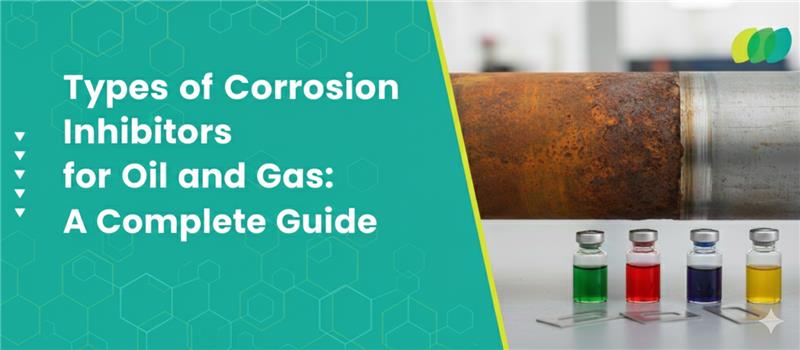
Corrosion drains the oil and gas production industry of an estimated $1.372 billion every year, according to a NACE International (now AMPP) study. That figure splits into $589 million for surface pipeline and facility damage, $463 million for downhole tubing failures, and $320 million in capital expenditures. Every unprotected pipeline, every untreated wellbore, and every neglected storage tank adds to that staggering total. The difference between catastrophic failure and decades of reliable operation often comes down to one decision—choosing the right corrosion inhibitor chemical.
This guide breaks down every major type of corrosion inhibitors for oil and gas production, from anodic to green formulations, so operations teams and procurement managers can make informed, confident decisions.
What Exactly Is a Corrosion Inhibitor?
A corrosion inhibitor is a chemical compound added in small concentrations to a corrosive environment. It significantly reduces the rate of metal degradation. In the petroleum sector, these chemicals protect carbon steel, stainless steel, and alloy components from electrochemical attack.
The oil and gas sector relies heavily on corrosion inhibitors for the petroleum industry to safeguard critical infrastructure. Pipelines, downhole tubing, separators, and storage vessels all face corrosive attack daily. CO₂, H₂S, organic acids, and high-salinity brines drive that attack relentlessly across every production phase.
Without effective inhibition, even premium-grade steel corrodes at alarming rates. A single untreated wet gas pipeline can lose 3–10 mm of wall thickness per year. That rate of metal loss leads to leaks, ruptures, and regulatory shutdowns.
How Do Corrosion Inhibitors Work in Oil and Gas Systems?
How do corrosion inhibitors work? The answer depends on the inhibitor type and the system environment. However, every inhibitor disrupts the electrochemical corrosion process at the metal surface. Some target the anodic reaction, some the cathodic reaction, and others address both simultaneously.
How does corrosion inhibitors work at a fundamental level? The general mechanism involves three steps:
- The inhibitor molecule travels through the fluid to reach the metal surface.
- It adsorbs onto the metal, forming a protective barrier or passive film.
- The barrier slows or blocks electrochemical reactions that cause metal loss.
Effective oil and gas corrosion inhibitors maintain this protective layer under extreme temperatures, pressures, and flow conditions. Performance depends on chemistry, dosage, application method, and system conditions. The inhibitor must also resist degradation from thermal stress and turbulent flow.
Key Types of Corrosion Inhibitors Used in Oil and Gas Operations
Understanding what are the types of corrosion inhibitors for oil and gas helps operators select the right solution for each application. The following categories represent the most widely deployed formulations across upstream, midstream, and downstream operations.
1. Anodic (Passivating) Inhibitors
Anodic inhibitors form a thin, protective oxide layer on the metal’s anodic sites. This passive film acts as a physical barrier against corrosive agents. Common anodic inhibitors include chromates, nitrites, and molybdates.
These inhibitors work best in near-neutral pH environments. Underdosing anodic inhibitors creates a dangerous risk of localized pitting corrosion. Proper concentration monitoring remains critical for safe, long-term operation in pipeline systems.
2. Cathodic Inhibitors
Cathodic inhibitors slow the cathodic half-cell reaction at the metal surface. They either precipitate insoluble compounds on cathodic areas or reduce oxygen availability. Zinc salts and polyphosphates represent common cathodic formulations used in the field.
The oil and gas sector often deploys cathodic inhibitors in water injection systems and cooling loops. These formulations carry lower pitting risk compared to anodic inhibitors. However, they generally provide moderate protection levels when used alone without supplementary treatment.
3. Mixed (Adsorption-Type) Inhibitors
Mixed inhibitors affect both anodic and cathodic reactions simultaneously. They adsorb onto the entire metal surface, creating a molecular-level protective film. Oilfield corrosion inhibitors based on imidazolines and quaternary ammonium compounds fall into this category.
Adsorption-type inhibitors dominate the corrosion inhibitors for oil and gas production market globally. Their dual-action mechanism offers comprehensive protection in complex, multiphase environments. Film persistence and re-healing ability make them ideal for continuous injection programs across upstream operations.
4. Film-Forming Amines (FFAs)
Film-forming amines create a hydrophobic molecular layer on the metal surface. This barrier repels water and corrosive species from contacting the steel directly. FFAs find extensive use in gas pipelines, condensate systems, and wet gas transmission lines.
Modern FFA formulations offer excellent performance in high-velocity flow conditions. Their self-healing film re-establishes protection even after mechanical disruption or slug flow events. Many leading corrosion inhibitor supplier companies prioritize FFA development for critical midstream applications.
5. Volatile Corrosion Inhibitors (VCIs)
VCIs release vapor-phase molecules that condense on metal surfaces in enclosed spaces. These molecules form an invisible, protective mono-layer across all exposed areas. The vapor-phase delivery method protects hard-to-reach surfaces effectively without liquid contact.
Operators commonly use VCIs during equipment storage, facility mothballing, and preservation campaigns. Preservation of idle wells, shutdown equipment, and spare parts requires consistent VCI application. The technology excels at protecting enclosed vessels, tanks, and piping systems during extended idle periods.
6. Green and Eco-Friendly Corrosion Inhibitors
Environmental regulations increasingly push the industry toward sustainable chemistry solutions. Green inhibitors derive from plant extracts, amino acids, and biodegradable organic compounds. These formulations meet strict offshore discharge requirements under OSPAR and regional frameworks.
Tannins, natural polymers, and amino acid derivatives show promising inhibition efficiency rates. Several studies report 85–95% protection rates for green formulations in mild operating conditions. Offshore operators seeking to buy corrosion inhibitor solutions increasingly request eco-friendly options for sensitive marine environments.
Corrosion Inhibitor Performance: Head-to-Head Comparison
| Performance Parameter | Anodic | Cathodic | Mixed/Adsorption | FFA | VCI | Green |
| Typical Efficiency (%) | 80–90 | 60–75 | 90–98 | 85–95 | 70–85 | 85–95 |
| Max Operating Temp (°C) | 120 | 100 | 180 | 150 | 80 | 90 |
| H₂S Tolerance | Low | Low | High | Moderate | None | Low–Moderate |
| CO₂ Tolerance | Moderate | Low | High | High | None | Moderate |
| Film Persistence | Moderate | Low | High | Very High | Moderate | Low–Moderate |
| Environmental Rating | Poor | Moderate | Moderate | Moderate | Good | Excellent |
| Relative Cost | Low | Low | Medium | Medium–High | Medium | High |
| Retreatment Frequency | Continuous | Continuous | Continuous/Batch | Continuous | Periodic | Continuous |
Selecting the right inhibitor demands a clear understanding of performance trade-offs. The table below compares key performance parameters across all six inhibitor types to support faster, data-driven decision-making.
This comparison highlights why mixed adsorption-type inhibitors lead the market. Their combination of high efficiency, temperature tolerance, and sour gas resistance makes them versatile across most oilfield scenarios.
Looking for high-performance oilfield corrosion inhibitors for upstream and midstream operations?
Explore Minal Specialities’ Corrosion Inhibitor Range →
Classification Based on Application Method
Beyond chemistry, oil and gas corrosion inhibitors also classify by delivery method. Application technique affects inhibitor performance, cost efficiency, and overall maintenance frequency significantly.
Continuous Injection Inhibitors
Continuous injection delivers a steady, low-concentration dose into the production stream around the clock. Chemical injection pumps meter precise volumes at wellheads or platform topsides consistently. This method provides the most reliable protection for continuously flowing systems and high-rate producers.
Batch Treatment Inhibitors
Batch treatments involve periodic, high-concentration inhibitor slugs pushed through the system. Operators schedule batch treatments for pipelines, flowlines, and low-flow-rate wells on defined intervals. This approach suits intermittent production or systems lacking permanent injection infrastructure at remote locations.
Squeeze Treatment Inhibitors
Squeeze treatments inject inhibitor directly into the near-wellbore formation rock matrix. The formation slowly releases the chemical back into produced fluids over weeks or months gradually. This technique eliminates the need for surface injection equipment at remote or subsea wells entirely.
How to Select the Right Corrosion Inhibitor for Oil and Gas
Selecting the right corrosion inhibitor chemical demands a systematic evaluation of operating conditions and risk factors. No single inhibitor works universally across all oil and gas environments or production scenarios.
Key selection factors include:
- Corrosive species present (CO₂, H₂S, organic acids, chlorides)
- Operating temperature and pressure ranges across the system
- Flow regime—single-phase, multiphase, or stagnant conditions
- Metallurgy of the equipment, piping, and downhole completions
- Environmental and discharge regulations for the operating region
- Compatibility with other production chemicals in the treatment program
- Total cost of ownership, not just chemical cost per liter
A qualified corrosion inhibitor manufacturer conducts detailed compatibility testing before recommending a formulation. Laboratory testing under simulated field conditions validates inhibitor performance accurately. Field trials confirm results before full-scale deployment across the entire asset.
Benefits of Using the Right Corrosion Inhibitors
Deploying the correct corrosion inhibitors for the petroleum industry delivers measurable operational and financial advantages. The benefits extend across safety, production efficiency, and long-term asset longevity.
- Extended asset life: Proper inhibition adds 10–20 years to pipeline and equipment service life.
- Reduced maintenance costs: Fewer corrosion-related repairs cut operational expenses by 25–40%.
- Improved safety: Corrosion-related failures cause leaks, blowouts, and environmental disasters.
- Higher production uptime: Less unplanned downtime keeps wells and facilities producing steady revenue.
- Regulatory compliance: Proper corrosion management meets HSE and environmental standards globally.
- Lower total cost of ownership: Prevention always costs far less than replacement or catastrophic repair work.
Common Challenges in Corrosion Inhibitor Deployment
Even the best oilfield corrosion inhibitors face real-world deployment challenges in the field. Understanding these obstacles helps operators plan better and avoid costly operational mistakes.
- Underdosing risks: Insufficient inhibitor concentration accelerates localized corrosion, especially dangerous pitting.
- Chemical compatibility: Some inhibitors react negatively with scale inhibitors, demulsifiers, or biocides already present.
- High-temperature degradation: Certain formulations lose effectiveness above 150°C, requiring specialized high-temp chemistry.
- Monitoring complexity: Maintaining optimal dosage across changing production conditions requires continuous real-time monitoring.
- Environmental restrictions: Offshore discharge limits eliminate many traditional high-performance inhibitor chemistries from consideration.
The Role of a Reliable Corrosion Inhibitor Manufacturer and Supplier
Choosing the right supplier of corrosion inhibitors matters as much as choosing the right chemistry itself. A reliable partner offers more than just chemical supply—it delivers complete corrosion management support.
A trusted exporter of corrosion inhibitors provides technical support, application engineering, and field-service expertise globally. Custom formulation development addresses unique well and reservoir conditions precisely. Consistent product quality and supply chain reliability prevent dangerous protection gaps during critical operations.
When looking to buy oil and gas corrosion inhibitors, operators should evaluate the supplier’s testing capabilities, field track record, and global logistics network thoroughly. Long-term partnerships with a proven corrosion inhibitors manufacturer & supplier protect both physical assets and bottom-line profitability across every production phase.
Emerging Trends in Oil and Gas Corrosion Inhibitor Technology
The corrosion inhibitors for oil and gas production sector continues to evolve rapidly with new innovations. Several trends reshape how operators approach corrosion management and chemical treatment programs.
- Smart inhibitor systems: Responsive chemistries that activate only when specific corrosion conditions arise in the system.
- Nanotechnology-enhanced inhibitors: Nanoparticle formulations deliver superior surface coverage and long-lasting film persistence.
- Digital corrosion monitoring: IoT sensors and real-time data analytics optimize inhibitor dosing automatically without manual intervention.
- Biodegradable formulations: New green chemistry platforms meet OSPAR and other strict environmental discharge standards.
- Multi-functional chemicals: Single products combining corrosion inhibition with scale and hydrate control reduce treatment complexity significantly.
Conclusion
Selecting the right type of corrosion inhibitor chemical protects critical oil and gas infrastructure from costly failures. Each inhibitor category—anodic, cathodic, mixed, FFA, VCI, or green—serves a distinct operational need. Partnering with an experienced manufacturer of corrosion inhibitors ensures optimal chemistry selection, application support, and long-term asset protection.