
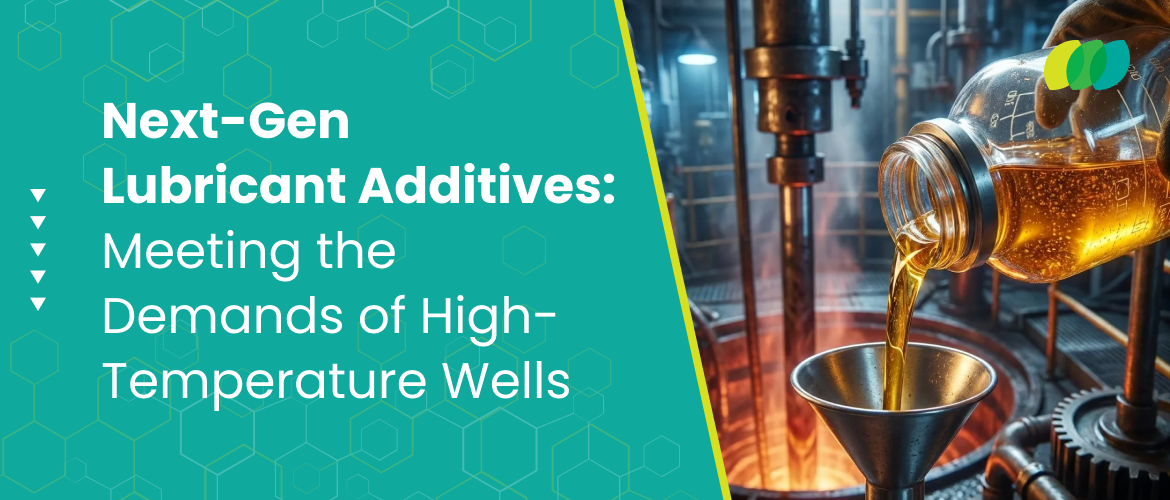
Drilling had to evolve as wells became deeper, and heat quickly emerged as a major challenge. Lubricants in drilling machinery are now exposed to temperature levels that were uncommon a decade ago.
If lubricants are heated and then reheated, they will break down rapidly, leading to unpredictable equipment performance and a drop in operational efficiency. The equipment on the machines will be worn out much faster. Maintenance schedules become impossible to follow. Production will be stopped as a lubricant expected to perform for weeks may degrade in just a few days.
The industry responded by developing advanced lubricant additive packages tailored for extreme temperatures. These are not small steps; rather, they signify a real change in how we protect our machines when the temperature goes beyond what normal fluids can withstand.
The High-Temperature Challenge in Modern Wells
Oxidation happens faster when it is hot. Lubricants begin to thicken and form deposits. The fluid that is supposed to protect metal parts becomes the thing that clogs them up.
Failure at depth results in expensive downtime, mobilization delays, and lost production. You lose time getting back online. Teams sit idle while you fix what broke. The financial hit adds up quickly, especially when these failures could have been prevented.
Deeper wells mean more heat exposure. There is no way around that. Traditional lubricants were made for different scenarios, and they quickly reveal their limits when you go beyond 300 degrees Fahrenheit for a long time.
Your base oil starts breaking down at the molecular level. Once thermal degradation begins, corrective steps cannot reverse the molecular breakdown. You need additives in lubricants built specifically to survive what you are putting them through.
What Next-Gen Lubricant Additives Bring to the Table
Three types of additives handle most of the heavy lifting in high-heat environments. Each one addresses a different issue caused by heat. Antioxidants prevent oxidative reactions that degrade the lubricant. Viscosity improvers prevent the liquid from becoming too thin as the temperature rises. Antiwear agents ensure metal surfaces remain protected even when the lubricant film is pushed aside.
You need all three working together. Miss one, and you have a weak point that heat will exploit. Modern formulations from a good lubricant additive manufacturer balance these three elements based on what your wells actually experience.
Antioxidants: Protecting Lubricants from Thermal and Oxidative Stress
Oxygen attacks your lubricant when heat is present. The reaction creates acids and sludge. Left alone, this process turns your fluid into something that hurts more than it helps.
Antioxidant additives in lubricants prevent the reaction from occurring in the first place. They neutralize free radicals that trigger lipid peroxidation in the lubricant. Phenolic kinds tolerate higher temperatures and sometimes change the color of your fluid. Aminic antioxidants maintain color stability but have different thermal limits.
The choice depends on what you are dealing with downhole. Temperature ranges matter. So does how long the fluid sits at peak heat. A knowledgeable lubricant additives supplier evaluates your exact operating conditions before recommending a formulation. Without antioxidants, the lubricant can thicken into sludge that restricts flow. Equipment starts failing because the fluid meant to protect it has turned into the problem.
Viscosity Improvers: Maintaining Performance When Temperature Spikes
Heat makes lubricants thinner. That is basic physics. When viscosity drops too much, you lose the protective film between moving parts. Metal starts touching metal, and wear accelerates.
Viscosity improvers are polymer chains that react to temperature changes. They help maintain thickness even when conditions would normally cause the fluid to thin out too much.
This matters because you cannot constantly adjust your lubricant based on temperature fluctuations. The fluid needs to work across the full range of what your equipment sees during operation.
Some polymers degrade under heavy mechanical stress, breaking into smaller fragments and losing effectiveness. They shear themselves into smaller particles and lose their functionality. On better formulations, you will find that the polymers are resistant to this dissolution. You want additives for lubricants that remain effective even under thermal and mechanical stress.
Antiwear Agents: Defending Metal Surfaces Under Extreme Conditions
Lubricant films can fail under extreme pressure and heat. “When this occurs, an additional layer of protection is required. Antiwear agents create a chemical barrier that prevents direct contact between surfaces.
ZDDP has been the mainstay for years, but some new compounds offer better performance at high temperatures. The antiwear compound must remain stable and active under extreme heat.
A proper lubricant additive package includes antiwear protection that matches your thermal environment. Some older formulations stop working above certain temperatures. The compounds break down and leave your equipment exposed right when protection matters most.
Less wear means longer equipment life. Besides, your drilling components, pumps, and motors will last longer as the friction damage will be minimal.
Maintenance, instead of being a constant battle, becomes more of a routine and predictable one.
Why Next-Gen Lubricant Additives Matter
Your operations demand fluids that match real conditions. High-temperature wells are not going away. Equipment has to function reliably at temperatures that would have been considered extreme not long ago.
The best lubricant additives are the ones that prolong your maintenance intervals and lower the risk of sudden breakdowns. That directly results in cost savings and better uptime.
Working with experienced lubricant additives manufacturers gets you formulations that have been tested in actual field conditions. They understand how antioxidants, viscosity control, and antiwear protection need to work together.
Better additives mean fewer production interruptions. You spend less time managing fluid problems and more time keeping wells operational.
Conclusion
Wells with very high temperatures require lubricants with heat-resistant properties. When thermal stress becomes the norm, standard products will fail.
Present-day lubricant additive technology deals with this problem through chemistry designed for harsh conditions. Antioxidants are substances that prevent oxidation. Viscosity improvers ensure the lubricant maintains adequate film thickness across temperature swings. Antiwear agents protect surfaces when the film fails.
The effectiveness of your lubricant additives ultimately depends on the quality of the manufacturer’s formulation. The right composition not only can prevent costly failures but also can maintain production in locations where normal fluids would be destroyed