
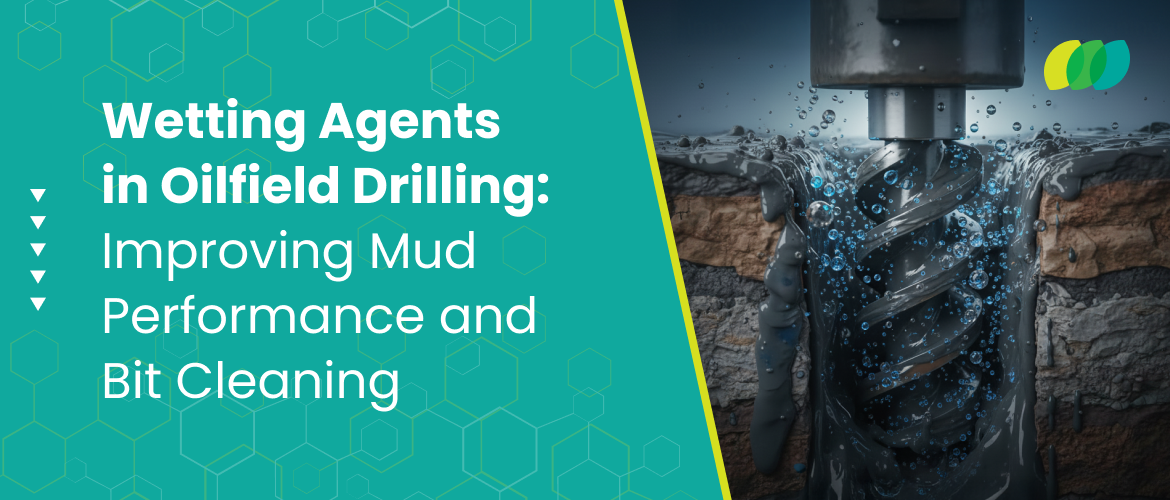
Drilling operations face a persistent challenge that costs the industry millions annually: inadequate mud performance. When drilling fluids fail to properly wet drill cuttings and formation surfaces, operations slow down, bits wear prematurely, and efficiency plummets. This critical issue stems from surface tension barriers that prevent optimal fluid contact with rock surfaces and metal components.
Wetting agents emerge as the solution to this pervasive problem, fundamentally transforming how drilling fluids interact with downhole equipment and geological formations. These specialized chemical additives reduce interfacial tension, enabling superior penetration and coverage that directly translates to measurable operational improvements.
Understanding Wetting Agents in Drilling Operations
What is a wetting agent in the context of oilfield drilling? A wetting agent functions as a surface-active compound that modifies the interfacial properties between drilling mud and solid surfaces. These agents work by reducing surface tension, allowing fluids to spread more effectively across drill bits, casing, and formation cuttings.
What is the function of a wetting agent? The primary function centers on enhancing fluid displacement capabilities. According to research published in the Journal of Petroleum Science and Engineering, wetting agents lower contact angles between fluids and solids from typically 90-120 degrees to less than 30 degrees, dramatically improving surface coverage and cleaning efficiency.
The molecular structure of wetting agents features both hydrophilic and hydrophobic segments. This amphiphilic nature enables them to orient at interfaces, with the hydrophobic tail attaching to oil-wet surfaces while the hydrophilic head extends into the aqueous drilling fluid. This orientation fundamentally alters surface energy, promoting complete wetting.
If you want to know what is wetting agent clearly then reading our blog on what is a wetting agent, its types, and applications will be very useful to you. It also help you to know how to choose the right wetting agent.
Classification and Selection Criteria
Types of Wetting Agent
Anionic wetting agents dominate oilfield applications due to their exceptional stability in high-salinity environments. These negatively charged surfactants demonstrate superior performance in water-based muds, particularly in formations with clay content. Common examples include sulfonates and sulfates that maintain effectiveness at temperatures exceeding 300°F.
Nonionic variants offer versatility across diverse pH ranges and temperature conditions. These electrically neutral compounds resist precipitation in hard water and tolerate high electrolyte concentrations. Ethoxylated alcohols and alkyl phenols represent this category, providing consistent performance without ionic interference.
Cationic wetting agents, though less common in drilling applications, find specific uses in shale formations where positive charge interaction benefits clay stabilization. However, their application remains limited due to potential compatibility issues with anionic additives commonly present in drilling fluids.
Amphoteric agents combine features of both anionic and cationic types, adapting their charge based on pH conditions. This flexibility makes them valuable in applications requiring tolerance to extreme downhole environments. Research from the American Chemical Society demonstrates their effectiveness in reducing stuck pipe incidents by improving filter cake quality.
Mechanisms of Mud Performance Enhancement
Wetting agents elevate drilling mud performance through multiple mechanisms. Surface tension reduction enables better penetration into microfractures and pore spaces within drill cuttings. This enhanced penetration prevents cuttings from agglomerating, maintaining mud rheology and preventing viscosity spikes that slow drilling rates.
The agents facilitate superior dispersion of drill solids throughout the mud system. By reducing particle aggregation, they maintain consistent mud weight distribution and prevent settling. Field data from horizontal drilling operations shows that proper wetting agent dosing reduces equivalent circulating density variations by up to 0.3 ppg.
Filtration control represents another critical benefit. Wetting agents modify filter cake permeability by ensuring uniform particle packing at the wellbore face.
Bit Cleaning Efficiency and Rate of Penetration
Effective bit cleaning directly correlates with penetration rates. Wetting agents enable drilling fluid to completely wet bit surfaces, preventing cuttings adhesion and bit balling. When cuttings fail to release from bit teeth and cone surfaces, drilling efficiency drops precipitously.
Laboratory tribology studies demonstrate that wetting agents reduce friction coefficients at the bit-rock interface by 15-30 percent. This reduction translates to decreased mechanical specific energy requirements, allowing faster drilling with equivalent weight-on-bit and rotary speed parameters.
PDC bit performance particularly benefits from wetting agent addition. The enhanced fluid film at the cutter-formation interface improves cooling and reduces thermal degradation of polycrystalline diamond compacts. Operators report PDC bit life extensions of 20-35 percent when using optimized wetting agent formulations.
Performance Metrics: With and Without Wetting Agents
| Performance Parameter | Without Wetting Agents | With Wetting Agents |
| Rate of Penetration | Baseline | 12-18% increase |
| Fluid Loss (API) | 8-12 mL/30 min | 5-7 mL/30 min |
| Stuck Pipe Incidents | Standard frequency | 30-45% reduction |
| Bit Life (PDC) | Baseline hours | 20-35% extension |
| Contact Angle | 90-120 degrees | 15-30 degrees |
Application Protocols and Dosage Optimization
Proper dosage determination requires consideration of multiple factors. Mud type, formation mineralogy, temperature, and salinity all influence optimal concentration ranges. Most applications require dosages between 0.5 and 3.0 pounds per barrel, with specific adjustments based on laboratory testing.
Pre-dilution before addition prevents shock loading of the mud system. Wetting agents should enter the active system through the mixing hopper with adequate circulation time for complete dispersion. Rapid addition can cause temporary foaming or air entrainment issues.
Compatibility testing remains essential when introducing wetting agents to existing mud systems. Some formulations may interact with polymers, weighting agents, or other surfactants already present.
Environmental Profile and Regulatory Compliance
Modern wetting agent formulations increasingly emphasize environmental acceptability. Biodegradable variants derived from renewable feedstocks meet stringent offshore discharge requirements while maintaining performance standards. These formulations typically achieve greater than 60 percent biodegradation within 28 days.
Toxicity profiles matter particularly in sensitive environments. Low-toxicity wetting agents demonstrate LC50 values exceeding regulatory thresholds, minimizing impact on marine ecosystems. Selection of environmentally responsible products aligns with corporate sustainability objectives without compromising operational effectiveness.
Proper handling and storage procedures prevent degradation and maintain product integrity. Most wetting agents require storage between 40-120°F, protected from direct sunlight and extreme temperatures. Shelf life typically extends 12-24 months under recommended conditions.
Troubleshooting Common Application Challenges
Excessive foaming indicates overdosing or incompatibility issues. Reducing concentration or switching to a low-foam variant typically resolves this problem. Antifoam agents provide temporary relief but may interfere with wetting agent effectiveness.
Inadequate performance despite proper dosing suggests deactivation by contaminants. High hardness levels, excessive solids loading, or chemical interference can neutralize wetting agent activity. Water analysis and mud testing identify the root cause, enabling targeted corrective action.
Temperature degradation occurs when agents exceed their thermal stability limits. High-temperature drilling requires selection of thermally stable formulations rated for anticipated bottomhole temperatures. Regular mud checks verify continued wetting agent activity throughout extended operations.
Sourcing and Supply Chain Management
Selecting a reliable wetting agents manufacturer proves critical for consistent product quality and technical support. Established manufacturers maintain rigorous quality control protocols, ensuring batch-to-batch consistency essential for predictable downhole performance.
Working with a qualified wetting agents supplier provides access to comprehensive technical resources. Leading suppliers offer field support, laboratory services, and application engineering to optimize product selection and usage protocols for specific drilling conditions.
International operations benefit from partnering with a capable wetting agents exporter experienced in global logistics and regulatory compliance. Export documentation, customs clearance, and regional regulatory requirements demand expertise beyond simple product supply.
Organizations seeking to buy wetting agents should evaluate suppliers based on multiple criteria. Product performance, technical support capabilities, delivery reliability, and total cost of ownership outweigh initial price considerations in most operational contexts.
Decision-makers looking to purchase wetting agents benefit from requesting product samples for laboratory evaluation before committing to bulk orders. Compatibility testing with existing mud systems and verification of performance claims prevents costly field failures.
Identifying a qualified wetting agent manufacturer & supplier requires due diligence. Industry certifications, safety data sheet completeness, and references from similar applications provide insight into supplier capabilities and reliability.
Cost-Benefit Analysis and Return on Investment
Wetting agent investment delivers measurable returns through multiple mechanisms. Increased penetration rates reduce rig time, with daily operating costs often exceeding $50,000-$100,000 for offshore operations. Even modest ROP improvements generate substantial savings.
Extended bit life reduces trip frequency and associated non-productive time. Each avoided bit trip saves 8-12 hours of rig time, translating to significant cost avoidance over multi-well drilling campaigns.
Stuck pipe prevention represents the most dramatic potential savings. A single stuck pipe incident can cost $1-5 million in lost time, equipment, and potential well abandonment. Reducing incident frequency through improved mud performance provides substantial risk mitigation.
Emerging Technologies and Future Directions
Nanotechnology integration promises next-generation wetting agent performance. Nanoparticle-enhanced formulations demonstrate superior thermal stability and resistance to chemical deactivation. Research indicates these advanced systems maintain activity at temperatures exceeding 400°F.
Smart surfactants respond to downhole conditions, adjusting their wetting characteristics based on temperature or pH changes. This adaptability optimizes performance across varying formation conditions encountered during extended reach drilling.
Biodegradable formulations continue advancing, with new chemistries offering performance parity with conventional products while exceeding environmental standards. The transition toward sustainable drilling fluids accelerates as regulatory requirements tighten globally.
Conclusion
Wetting agents deliver tangible operational improvements in drilling efficiency, bit performance, and mud stability. Proper selection, application, and monitoring maximize these benefits while minimizing costs and environmental impact for sustainable drilling operations.
Ready to optimize drilling performance? Contact qualified wetting agent specialists to discuss custom formulations tailored to specific operational requirements. Request laboratory testing and field trial support to validate performance improvements before full-scale implementation.
Frequently Asked Questions
Wetting agents reduce surface tension to improve fluid-solid contact, while emulsifiers stabilize oil-water mixtures. Though both are surfactants, they serve distinct functions in mud systems.
Most applications achieve optimal results between 0.5-3.0 lb/bbl. Laboratory testing determines precise dosing for specific mud systems and drilling conditions. Overdosing wastes resources without additional benefits.
Properly selected wetting agents minimize formation damage. Low-residue formulations reduce permeability impairment. Reservoir drilling sections may require specific wetting agent types or reduced concentrations.
Effects appear within 2-4 circulation cycles after addition. Full optimization requires complete dispersion throughout the mud system. Real-time drilling parameters confirm effectiveness through improved ROP and reduced torque.
Store between 40-120°F in sealed containers, protected from sunlight and temperature extremes. Freezing or excessive heat causes chemical breakdown. Typical shelf life reaches 12-24 months under proper conditions.